It is a hard number to fathom: $40 trillion. Our national debt eclipsed $40 trillion this past week. The yield on the 10-year Treasury is now 4.7 percent, and the dollar is weakening. Treasury Secretary Scott Bessent has a solution: The Treasury will just start buying back our debt. In plain English, this means he will turn on the printing press and print more dollars, the idea being that if the Treasury buys its own bonds, it can drive down interest rates. Unfortunately, investors know what that really means: more inflation, which is the most lingering problem we have in our economy, and a death knell to fixed income investors. Mr. Bessent’s announcement had the opposite impact to what he intended: rates went up.
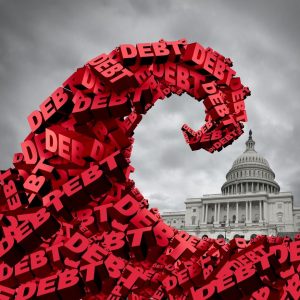
I’m not sure what is more frightening – the amount of our national debt, or the fact that no politician is talking about it. In fact, it is at this moment in our nation’s history, with the most debt we have ever had, that the idea of socialism has reemerged from the dustpan of history. Margaret Thatcher famously said, “Socialist governments traditionally do make a financial mess. They always run out of other people’s money.” We may well run out of other people’s money before the socialists even get their chance.
Some of you are thinking, “We can just have the billionaires pay for it all if only they paid their fair share.” I hate to burst that fantasy bubble, but down here in the real world the United States already has the most progressive tax system of any developed country. To be clear, the “rich” pay a larger share of the tax burden in the United States than in any other developed nation. The Forbes 400, the 400 richest people in America, have a combined net worth of $6.6 trillion; we owe $40 trillion. This is not complicated math.
Taxing more will not solve this issue. There is a saying in personal health that one cannot out exercise a poor diet. Similarly, in finance one cannot out-earn poor spending habits. This is true for the individual, the family, the corporation, and the government. When one starts using one credit card to pay the minimum on the other credit card, then he is in deep financial trouble. This is in essence what Scott Bessent says the government needs to do.
There are significant political ramifications for all of this, but our job is to manage your investments through this environment. What are we to do? The thing that ultimately destroys those who cannot control their spending is the interest rate on the debt. As one’s credit rating goes down, the interest rate they must pay goes up, making it even more difficult to get out of the hole. This is true for governments as well as individuals.
Interest rates are what matters here to investors. There is a saying on Wall Street, “When rates are high stocks die, when rate are low stocks grow.” Like many Wall Street tidbits this is hugely over simplified, but there is some truth to it. Historically what actually takes place is that stocks rise with interest rates, and it is when rates peak that stocks go down. Then rates drop, and stocks begin to rise again. So, it isn’t enough to know that rates are higher today than they have been. The question is, when will they hit their peak?
Knowing that in advance is, of course, impossible. This is yet another reason why prudent investing is done from the bottom-up. Corporate earnings remain strong, and that is what matters to investors. However, caution is in order. To paraphrase the song, our nation which celebrated 250 years is another day older and deeper in debt. St. Peter don’t call us ‘cause we can’t go, we owe our soul to the government store.
Warm regards,

Chuck Osborne, CFA
