The difficulty lies not so much in developing new ideas as in escaping from old ones.
John Maynard Keynes

Adding perspective is a large part of our job at Iron Capital. We are often asked to share our views on issues not directly related to investing; other times we are asked about a specific investment opportunity. To that end, we share these thoughts on our blog, appropriately titled, “Perspectives.”
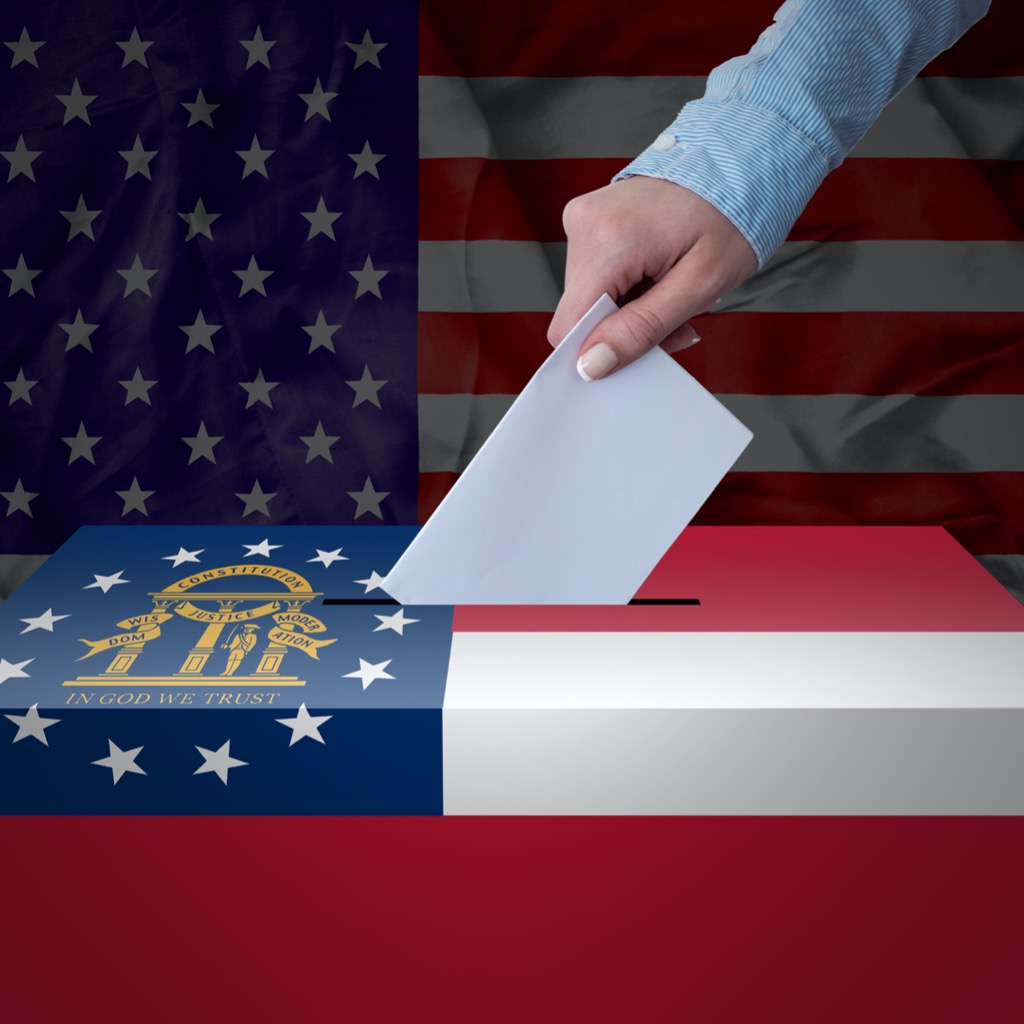
I’m sure everyone is aware by now that we have some new voting laws in Georgia. This “conversation” is a great example of everything wrong with our political discourse today. I have no position on this bill either way; for me, the larger issue is our level of discourse.
Paraphrasing Milton Friedman: If one actually cares about people, then she must care about results. So, what would the result of a nationwide $15 minimum wage actually be?
I believe Milton Friedman put it best when he said, “One of the great mistakes is to judge policies and programs by their intentions rather than their results.”
Wednesday was one of the saddest days in our history, yet the market sluffed it off. The lesson: actions have consequences. Right is right and wrong is wrong and we all know it when we see it. If we want things to change, then it has to start with us.

Principle should guide our views, not the color of our uniform. If one’s political opponent happens to agree with her, then that is cause to celebrate, not to disagree for the sake of being disagreeable.
I have lived in Georgia since 1992, and I had no idea how popular we are. I’m sure everyone is aware by now that we have some new voting laws in Georgia. This “conversation” is a great example of everything wrong with our political discourse today. Let me state up front, that I have no position on this bill either way. For me, the larger issue is our level of discourse.
I Googled “what is in the GA election bill” and the first response that showed up was from a group called the Brennan Center for Justice. It referred to the bill as an election suppression bill and went on and on about how horrible the bill was, yet did not make one mention of anything in the bill.

Next up: CNN, which referred to it as imposing “new voting restrictions,” claiming multiple times that this is all about the 2020 election and the fact that Joe Biden won in GA. They did at least quote some supporters of the bill, although they did so in such a way as to make them seem disingenuous. Big bonus if one actually read through the repetitious accusations of voter suppression – CNN did finally mention two elements of the actual bill in the last paragraph.
This article was followed by several more from news outlets like The New York Times, whose headline is, “Georgia GOP Passes Major Law to Limit Voting.” I’ll admit to not even reading that article. All the while, CNBC is interviewing CEOs of big corporations who were all damning Georgia for its horrible new law – once again doing so without any specific discussion about provisions in the bill that make it so horrible.
Three altered Google searches later, I finally found the actual bill. According to the bill itself, this is not just about the 2020 election in Georgia, but also the 2018 election. Some who are politically minded may be aware that Stacey Abrams, who ran for governor in 2018 and lost, has been touring the country ever since claiming that she is the rightful governor of Georgia and the 2018 election was fraudulently stolen. Does that claim sound familiar?
The 2020 election was the second in a row in Georgia in which one side claimed the election was not fair. It seems reasonable that something should be done about that. The bill goes on to give the State more oversight authority over the localities that actually run elections. I can see where that could be a problem, but it does seem reasonable to me that one should have some higher authority for recourse if she believes local officials are corrupt.
The bill goes on and on about treating every local jurisdiction equally in terms of funding and resources. That may or may not be wise, but it doesn’t seem evil.
It requires people requesting absentee ballots to give their driver’s license (or state issued ID card) number. We have had to show identification in order to vote in Georgia as long as I have lived here, so I don’t understand this being a big deal, but evidently this is one of the “suppression” tactics. Of course, there is no explanation for why this is some kind of hardship. I frankly can’t think of anything of importance where an ID is not required. That is why we never leave home without it.
The bill provides for absentee ballot drop-off boxes. This is one aspect that was completely misrepresented in every media story I read; there have never been drop-off boxes in Georgia until 2020. They came about in this past election because of pandemic emergency measures. Those measures expired after the election, therefore, under existing Georgia law there would be no drop-off boxes. I know nothing of the wisdom of drop-off boxes, but this is an expansion of access, not a limitation.
The last controversial element, as far as I can tell, is that there is now a requirement to request an absentee ballot at least 11 days before the next election. This comes from a recommendation by the United States Postal Service, which says to ensure ballot integrity and on-time delivery, such requests should be made 15 days in advance. It is unclear why Georgia shaved four days off of the actual USPS recommendation, but it is more unclear to me where the suppression resides in all of this? There has to be some deadline; if not, should all the Republican voters who did not show up in January (because Trump told them Georgia elections are rigged) get to vote now?
I am no expert in election laws, and perhaps this is the worst piece of state legislation ever passed in the 245 year history of our nation. However, if this is the case, why is there zero substance in the rebuttals? Why resort to name-calling and accusations? Why do some mention no actual provisions of the bill at all and others hide them in the last paragraph of articles? Maybe the Devil has come to Georgia looking for a soul to steal and this election reform is his work, I don’t know. I wasted my whole morning researching it and I still don’t know, and that is the problem.
What I do know is that a democracy cannot function for long with this level of discourse. There is no substance. If there is a problem with a bill, then point it out. Reference the actual bill specifically and explain why it is wrong. If we cannot have substantive conversations, then we will not survive. At least that is my perspective.
Warm regards,

Chuck Osborne, CFA
Managing Director
~The Devil Went Down to Georgia
“One of the great mistakes is to judge policies and programs by their intentions rather than their results.” – Milton Friedman
This is possibly the most important sentence ever spoken by an economist. If one actually cares about people, then she must care about results. So, what would the result of a nationwide $15 minimum wage actually be?
I believe that 99 percent of the people who support the national $15 minimum wage do so out of true concern for people in minimum wage jobs, but in truth have given very little thought to what that means. The mantra is that everyone deserves a “living wage.” The problem with that comment is that it is not factual; every single worker does not need to be paid a living wage.
My 13-year-old son has an entrepreneurial streak (the apple does not fall far after all). This summer he took responsibility for our yard care and he also mowed lawns for some neighbors. My 13-year-old son is a worker who does not need to make any money at all. His parents provide for every “need” he has. Some of our friends’ sons have started a business taking garbage cans to and from the curb on garbage day. These workers do not need a living wage.
Minimum wage is meant for workers such as these. Young people, with no employable skill or experience, in need of a first job. My first official job for an established company (I had a similar entrepreneurial streak and cleaned pools as a kid) was making sandwiches at Subway for minimum wage. After a few months I took my food service experience down the street to Bennigan’s and started waiting tables. It represented a big raise. I did that until I turned 21 and then got promoted to bar tender. I made more in one night tending bar than I made in a week making sandwiches, but would have never gotten that chance if I didn’t have that minimum-wage job.
The result of a national $15 minimum wage is that these early life opportunities will be gone. That is not an opinion, it is economic reality, and it happens everywhere in the world when higher minimums have been set. So that is one result of the $15 minimum wage: fewer jobs for younger and inexperienced workers.

Having said that, there are grown adults in our country who actually are trying to make a living and are stuck in minimum-wage jobs. There is disagreement among economists as to the percentage of minimum-wage earners who are in this category, which is unfortunately typical of our national dialog – we no longer even agree on facts. For me it does not matter the percentage; if a single grown adult in the United States of America is stuck in a minimum-wage job, it is a moral outrage. That simply shouldn’t happen, and unfortunately it does.
This is where academic economists completely miss the point, in my opinion. They are so preoccupied with the mathematical models, they forget we are talking about human beings. When one sees articles stating that economists disagree on the impact of a $15 minimum wage, what that means is that they argue over the nuance of one mathematical model versus another. They argue about the number of jobs lost and one model says X while another says Y. That entire argument is a side show.
Grown adults stuck in minimum wage jobs need better jobs. I apologize if I offend, but the truth is that suggesting a slight raise as a solution to that problem is the moral equivalent of saying the solution to slavery was better rations. Wrong! The only moral solution to slavery was to abolish it, and the only moral solution to grown adults working for minimum wage is to create an economy with better opportunities – to do everything in our power to abolish that reality. Unfortunately, that takes more thought than can be written in the 280 characters Twitter allows.
Of course, there is another issue here, and this is of growing concern. Many people seem to forget that we are a country made up of 50 independent states. Many of the most avid supporters of the national $15 minimum wage live in places like New York, Chicago, and San Francisco. In their world, $15 is nothing. One could easily argue that in those locations the minimum should be much higher and that might not even have a negative impact on those young workers. However, Biloxi, Mississippi is a very different place than San Francisco. The national minimum, if we even have one, must be based on the lowest common denominator and that is Mississippi, because they have the lowest cost of living in the United States.
If one cares about people, one has to care about results. The result of a nationwide $15 minimum wage are fewer opportunities for young people trying to get a foot in the employment door, and some number of lost jobs – the exact measure of which economists debate, but there will be some who lose their job. The remaining adults stuck in minimum-wage jobs get a few more dollars and remain stuck in minimum-wage jobs. Those are not the results that caring people should want. At least that is my perspective.
Warm regards,
Chuck Osborne, CFA
Managing Director
~What Should Be the Minimum?
“The customer is always right.” That is a cliché that has been a mantra in customer service for years. Unfortunately, it isn’t true. At Iron Capital our staff has probably heard me say a million times, “The client (we have clients not customers) is not always right. If he were, we wouldn’t have a job.” This, in my opinion, is one of the attributes that is a major difference between Iron Capital and the other guys.
We always do what we believe is right, and it has cost us clients. We had one client who insisted that his portfolio should be 50 percent in bonds. I told him, and illustrated, that he could not achieve the required return if he did that and in essence he would be committing financial suicide. He left and sure enough about five years later we were asked to take another look at the portfolio, but by that time it was too late. There simply was not enough left to maintain the current lifestyle. That message was not well-received either.
We have disagreements with our institutional clients as well, usually because they want us to fire a manager much faster than we are willing to do. That has never cost us a client, but it has made for some stressful meetings. So why do we do it? Why don’t we just go along with whatever the client wants? It sure would be easier.

I believe Milton Friedman put it best when he said, “One of the great mistakes is to judge policies and programs by their intentions rather than their results.” We don’t believe in doing whatever the client wants because while the intention may be to keep the client happy, the result is often to hurt the client’s long-term financial wellbeing. We have a fiduciary relationship with all of our clients and therefore cannot just sit by and watch them hurt themselves.
Friedman was talking about public policy, and what he said 40 some years ago is as true today as it was then, perhaps even more so. This has always been at the heart of the divide in American politics: one side has always cared more about what they viewed as good intentions, and the other side has been more concerned with actual results. Government housing, rent controls, and price-fixing are just samples of past policies that were all put in place with great intentions, but that had horrible actual results.
The difference when I was younger was not that these disagreements did not exist, but that there always seemed to be a benefit of the doubt for the other side. We assumed everyone had good intentions, we just disagreed on the best approach. We were also anchored by empirical evidence, so by the time we got to the 1980’s there was no denying that government housing was a disaster, or that price controls caused shortages. We knew this, which is why it was Bill Clinton and not Ronald Reagan who pronounced the days of big government to be over.
Today that is no longer the case. Today, if one believes the Affordable Care Act (ACA) is a disaster and should be repealed, then as far as ACA supporters are concerned, he doesn’t want people to have healthcare. That, of course, is absurd, but it doesn’t seem to matter. It also does not seem to matter that the cost of health insurance (which is not the same thing as healthcare, by the way) has sky-rocketed since the passage of the ACA, and even the higher cost now comes with higher deductibles and copays, nor that getting to see an actual doctor (which is healthcare, by the way) is far more difficult.
Unfortunately, these are conversations that cannot take place, because as soon as one brings up the subject, she will be accused of not caring and wanting to take away people’s healthcare. If you don’t believe me, then you obviously do not live in Georgia, because we just went through the most expensive Senate race in history; if one were to believe the advertisements, then two candidates wanted no one to have healthcare, and the other two wanted everyone to have healthcare. This is our discourse today.
To some degree politicians have always tried to villainize their opponents and make it look like our choice is more black and white than it actually is, but today we seem to be going along with it. This comes in a large part because we no longer talk to one another. The other side is just a generic “they,” and the only choices are to do exactly as our side says or to be evil.
That mindset means that where one stands on a $15 minimum wage means she either cares about workers or doesn’t. It means if one thinks stopping a pipeline is a huge mistake, then he doesn’t care about the climate and is in denial about climate change. This mindset is destroying us, and it has to stop.
The truth is that the results of policies like $15 minimum wage or the Keystone pipeline are not black and white at all. We need to actually discuss such things and think them through. It would be easier to just go with it and proudly pronounce our goodness and caring for low-wage earners and the environment, but ultimately, what actually happens in the real-world matters.
Where those discussions lead and whether anyone ever changes her mind is not nearly as important as simply having the conversation, and that is what we are going to encourage through our posts in the coming weeks. These conversations should begin with an agreement that if one cares about people and the environment, then she has to care about the results of policies. We also need to recognize that no one (not even you or I) is always right. At least that is my perspective.
Warm regards,
Chuck Osborne, CFA
Managing Director
~The Client is Not Always Right
Wednesday was one of the saddest days in our history, yet the market sluffed it off. The lesson: actions have consequences. In the near term the election results have the consequence of more fiscal stimulus and that is Wall Street’s focus. The longer term will depend on what this administration and Congress actually accomplish. We shall see.
In the real world, however, things have gotten out of control and it is past time for it to stop. We all need to take ownership of the world around us and understand that what is happening today is the consequence of what we did yesterday.
Those who hate Donald Trump need to understand that his success as a politician was a direct result of at least eight years of his base being referred to as “bitter people clinging to their guns and religion” and then of course “deplorables.” To top that off, the leaders of the political party most of them associate with did nothing to defend them. Then Trump came along saying, “I am one of you.” They are going to call us deplorable no matter what, so we might as well act that way.
Boy did he. He acted horribly. So horribly that my home state just elected a senator who is seething with hate. His “sermons” make Trump’s tweets look like love poems. The problem is, when one defends the hate of her side, she then loses all credibility when pointing out the hate on the other side. Actions have consequences.
This summer, less than one fourth of a mile from my house, unspeakable violence took place. We were told that this is peaceful protesting. In my city an eight-year-old girl was shot and killed by “mostly peaceful protesters.” We were told that we should be with the protesters and that they are doing what Americans have always done. Their actions are justified by our sins.
Is it any surprise, then, that when Trump supporters gathered in Washington to peacefully protest that their mostly peaceful protest looked a lot like what happened this summer? It shouldn’t be.
I was watching Wednesday’s events unfold on CNBC, and Shepard Smith kept saying that these protesters were convinced that the election was rigged even though there is no evidence. Why can’t they be rational? For the better part of a quarter of a century our education industry has been spewing post-modernistic identity philosophy, which states that there is no such thing as evidence; truth is whatever one feels it is. Facts, reason, logic – that is all white privilege, Shep.
The truth is when one side gets to say facts don’t matter, then it will not take long for the other side to embrace facts not mattering. Actions have consequences.
All is not lost. Yesterday I got to spend some time on Zoom with a group of my college friends, one of whom served in the Navy after college. His response to yesterday’s events, “I have been a Republican all my life, I am a conservative, and what these people are doing is treason. They should be arrested and prosecuted.” Actions need to have consequences.
Right is right and wrong is wrong and we all know it when we see it. We have to stop excusing hate and violence just because we are sympathetic to their side or because we believe the other side has done worse. Hate is never justified. “They did this,” is never an excuse to behave poorly. The rioters in DC should be going to jail, as should the rioters from this summer. Hate should be condemned universally, whether it is tweeted from the White House or spoken from a pulpit.
If we want things to change, then it has to start with us. My New Year’s resolutions: to stand up to my friends when they go too far; to show empathy for those with whom I disagree; to remember I’m not nearly as smart as I think and they are not nearly as naive as they seem; to address the timber in my eye before concerning myself with the spec in my brother’s; and to remember that my actions have consequences. At least that is my perspective.
Happy New Year!
Chuck Osborne, CFA
Managing Director
~Actions Have Consequences
“An unjust law is a code that a numerical or power majority group compels a minority group to obey but does not make binding on itself.” – Dr. Martin Luther King, Jr., “Letter from a Birmingham Jail”
This past weekend I did something that I have never done before: I participated in a rally to get our kids back into the classroom. From New York to San Francisco parents came out to ask politicians and superintendents to listen to the CDC, the American Society of Pediatrics, and just about every other scientist and health expert in the world and get kids back into schools in person. Here is Atlanta we had more than 200 parents and students show up for the cause.

I am not sure how many other protest rookies were out there, but I think it must have been quite a few. How did we get here? What started as a knee-jerk reaction to a global pandemic has turned into political football with the primary victims being children. At some point, all parents have to stand up to protect their kids from complete injustice.
The excuse for why our schools are closed in Atlanta is the pandemic, but the pandemic affects the entire state of Georgia, as it affects the world, and the only school systems that are closed for in-person education are the Democratic hotbeds in Atlanta and Dekalb and Clayton Counties, two Metro Atlanta counties. The truth is, Donald Trump and Georgia’s Republican governor Brian Kemp have come out to support opening schools, so the people on the other side are going to keep the schools closed.
Children are the ones getting hurt, but not all of the children. Private schools have been open for business, and in Atlanta both our mayor and the Board of Education chair have taken advantage of that to give their kids the option for face-to-face (F2F) learning. You can’t make this stuff up. As MLK, Jr. pointed out in his “Letter from a Birmingham Jail,” one can tell a law is unjust when those who pass it do not follow it themselves.
Truth be told, my kids would be in one of those private schools had we not “won the lottery” and gotten them into a charter school, Atlanta Classical Academy (ACA), which, in my wife’s and my opinion, is the best school in the city academically. It has certainly been a good fit for our kids. As a charter school, ACA is supposed to have the autonomy to make its own decisions, but when it released its plan for F2F education this summer, Atlanta Public Schools vetoed it. The school has done very well under the circumstances, and our children have the blessing of two loving, well-educated parents who can provide them all the technology they require and help them in just about any subject. Still, we can see the suffering in our children – anxiety, depression, apathy. Being stuck on a screen for the entire school day to then have to do their homework on the same screens, never really seeing their friends or teachers, has taken a toll.
The tragedy is that the toll our kids have had to bear is as good as it gets. I see what has happened to them and I can only imagine what is happening in homes that have much less, or in families with disabilities, or in households where one or both parents’ jobs do not afford the flexibility to work remotely, never mind all of the above. We know that in some cases the kids just are not in school period. We know that abuse is not getting reported. We know that children are getting left behind. Why?
It is easy to blame our politicians, but we need to remember that our politicians are a reflection of the people who vote for them. We need to remember that every time we point our finger at someone else, we have three fingers pointing back at us. We are the reason our politics is no longer about issues, but about tribal warfare.
How else does one explain the very same people who proudly march down a street holding a sign saying “Science is Real” in support of climate change turning a blind eye to the medical community who now overwhelmingly agree that children should be in school in person? Science can’t just be real when we want it to be. How can people who preach social justice and equity turn a blind eye to the biggest social injustice since Jim Crow?
The answer is they are in the blue tribe, and it is the red tribe who wants schools open, so we must disagree, even if it goes against every principle we claim to possess.
I don’t mean to be one-sided in this argument. The issue of the day just happens to run in that direction. The red tribe was against tax reform of all things when the blue tribe’s president suggested it. The red tribe had long stood for character mattering, until they won with someone whose character, well…let’s just say he is a character. They also stood for free trade, until that same character decided that tariffs were good.
This goes both ways. The Wall Street Journal recently ran an article pointing out that in the 1980s, knowing how a person felt about one particular issue did not provide great insight into their overall political views. Today if you know where someone stands on one issue, then you know where they stand on all issues. The only way that could happen is if we have sacrificed our principles for tribe acceptance.
Yesterday’s Wall Street Journal had an op-ed from John Barrasso, Republican senator from Wyoming. He points out that Senator Schumer tried to hold up every single cabinet nomination made by President Trump, even low-level positions with clearly qualified mainstream nominees. This was new ground politically. Democrats attempted to block 79 appointments from Trump. The previous six presidents had combined for only 18. The point of Barrasso’s op-ed? Revenge is going to be hell.
When will it stop? Only when we all demand that it stops. Principle should guide our views, not the color of our uniform. If one’s political opponent happens to agree with her, then that is cause to celebrate, not to disagree for the sake of being disagreeable. If we truly want our politicians to act more nobly, then it starts with us. We have to look in the mirror and say, “I will to stand for what I believe is right, not for what is red or blue.” If we do that, then we may just be shocked how quickly our polarization will disappear. At least that is my perspective.
In the meantime, for God’s sake get our kids back in school!
Warm regards,
Chuck Osborne, CFA
Managing Director
~Education