The difficulty lies not so much in developing new ideas as in escaping from old ones.
John Maynard Keynes

Adding perspective is a large part of our job at Iron Capital. We are often asked to share our views on issues not directly related to investing; other times we are asked about a specific investment opportunity. To that end, we share these thoughts on our blog, appropriately titled, “Perspectives.”
My flight got in late that August evening in 2001. Corporate travel had booked me into some random “executive” hotel. I thought the cab driver had made a mistake when he dropped me off, because it didn’t even look like a hotel. The room was the smallest hotel room I had ever seen, which remains…
A recent Gallup poll suggests only 54 percent of Americans have a favorable opinion of capitalism. The same poll says that 81 percent of Americans approve of “free enterprise.” This is proof positive that at least 27 percent of Americans would fail a basic vocabulary test (and that 19 percent of Americans are just plain…
A few years ago, my then-preteen daughter became obsessed with eating at Cracker Barrel. If she had eaten at one before, she did not remember. That isn’t because her parents have anything against Cracker Barrel, we do not – we are both 100 percent Southern, and I won’t speak for my wife and her family,…
“Why The Global Economy Will Begin To Collapse In Eight Days” – This headline greeted me in my Substack feed upon my return from a family vacation. Unfortunately, by the time I saw the article it had been 14 days since it was published. I was too late. After 30-plus years of prudently investing my…
Rule one: When you realize you have made a mistake, don’t make it worse. That seems like such an easy concept, but it is so hard in real life. It is our nature to fixate on the original mistake instead of dealing with where we are now. This happens in investing all the time: An…
My flight got in late that August evening in 2001. Corporate travel had booked me into some random “executive” hotel. I thought the cab driver had made a mistake when he dropped me off, because it didn’t even look like a hotel. The room was the smallest hotel room I had ever seen, which remains true 25 years later. There was no room service, but I could get a pizza delivered. I sat there in my tiny room eating a pizza in the middle of the night thinking to myself, “Only in New York.”
The next morning, I arrived by taxi at 2 World Trade Center (South Tower). The thing that stuck out to me about the towers was how massive they were at the base; it was a long walk just to get to the door. Then I had to go through security. Lots of buildings in big cities have a security check in the lobby today, but in 2001 I remember thinking that security was really tight, and how safe people must feel. I was there to be trained on Zephyr Style Adviser, a software package that we used at Invesco Retirement to analyze both our own funds and the funds from other fund companies that we allowed onto our platform. We used it at Iron Capital until last year.

We were all worker bees, so when lunchtime came, we simply broke for lunch. Most of us went downstairs to the basement deli, and I still remember that I got a pastrami on rye sandwich. We went outside to eat because it looked like a beautiful day – which it was, but it was hot. I have lived all but four years of my life in the South, and as a true Southerner who knows a thing or two about being hot, it always amazes me how hot New York City gets in the summer. After about 10 minutes we all decided to take our sandwiches back upstairs to the training room and finish lunch there. Everyone went their own ways when the training ended. I got a cab back to LaGuardia, but a few got on the train underneath the towers to head back to Newark. I remembered thinking that the next time I had to do this, that is what I would do.
I never lived in New York, but one cannot spend a career in the investment management business without going there often. There was not really anything special about that particular trip except it was the last time I was in one of the towers. I think that is why I remember every detail of it so vividly. Just a few weeks later, another day happened that none of us will ever forget.
Everyone I have ever talked to about that September day always has the same observation: It was a stunningly beautiful early fall day. There is something about that disconnect that sticks in our minds. How could such a horrible day in our history be so beautiful? But it was. There was not a cloud in the sky, it was cool but not cold, just perfect. I was running late that morning and had to rush into my office. As I said good morning to one of my colleagues, she just looked up and said, “A plane crashed into the World Trade Center.” We first started speculating about what kind of plane it was. We assumed this must have been some small private plane that got off course and lost control.
Then it was confirmed that it was a passenger plane, and the mood changed. Shortly after the second plane hit, there was no doubt: This was an attack. All work ceased, and everyone on our floor crowded into the executive conference room to watch the big screen TV. We watched in silence, except for my boss, Mark Jones, who had been in the towers just days earlier visiting Aon Consulting. Everyone who was in the Aon office when the plane hit died. He kept repeating, “I was just there.”
We kept watching and then heard about the Pentagon and Flight 93 that crashed in Pennsylvania. Conspiracy theories started blooming immediately. Finally, the word got out that all high-rise buildings in metropolitan areas must be evacuated. We all walked down the stairs from the top floor of Colony Square in Midtown Atlanta and my colleague Paul Torregrosa and I went down the street to grab a sandwich at Joe’s on Juniper. We sat outside because it was a beautiful day, yet everyone was eerily quiet. We knew people in those towers, and we had two close colleagues from our office in Atlanta who were in the City that morning. This was all real for us.
When I got home my nephew, Ivan, who was living with me at the time, was there. He was in the Army Reserves and already wondering when he would get called up. I was single at the time and had nothing tying me to my life in Atlanta other than two Old English Sheepdogs. I considered enlisting, but Ivan told me that this would be over before I even got out of basic training, and then what? I thought he was probably right. He went on to serve two tours of duty in Afghanistan, two in Iraq, and a further two stateside. So much for things being over before getting out of basic training.
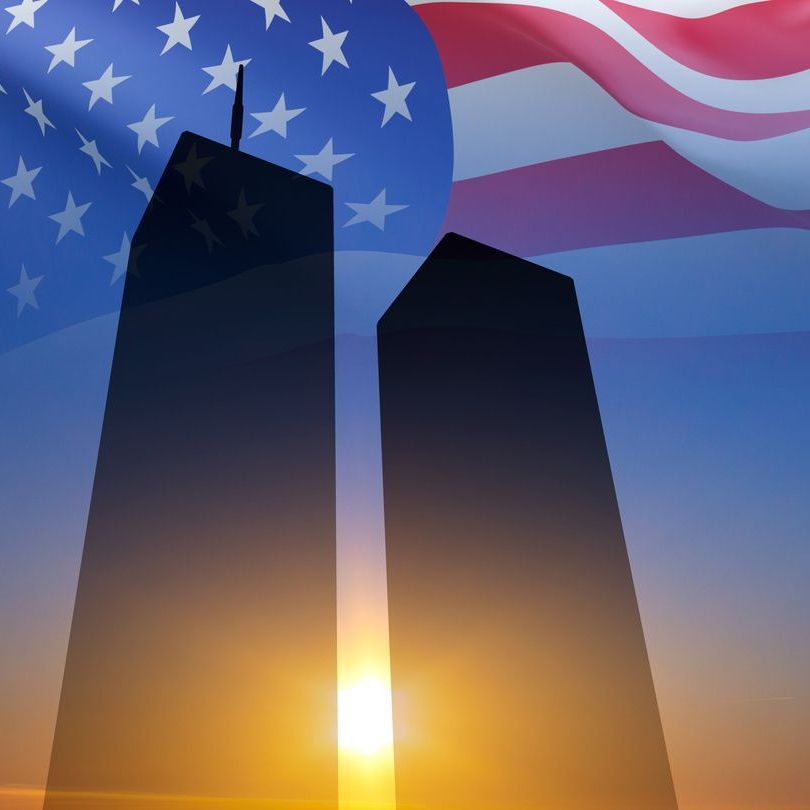
I’m sure anyone over the age of 35 can remember exactly where they were 25 years ago. It is another day which will live forever in infamy. Several people I knew died that day. I have always tried to be careful when saying that (our readers know how I feel about hyperbole), because I did not lose any loved ones – no close friends or relatives – while there are thousands who did. However, I knew people who had offices in the towers, some of whom survived but several of whom did not. Mark Jones had met with some of them just days before, and I had been there a few weeks before. Two of my close colleagues were right down the street as it was happening. I was not as close as many, but I was close enough for it to be very real.
For the next several days at work my job was to call all the investment firms we traded with and confirm that they would be able to operate when the market opened once more. In other words, I was to find out who was still alive and who wasn’t. It remains the hardest thing I have ever done in my career. I dreaded every single phone call. Of course, as always seems true with human beings, where there was the most suffering, I also witnessed the greatest strength and resilience. Fred Alger Management had lost most of its management team, but former partners, including founder Fred Alger, came out of retirement to save the firm.
My two colleagues were okay, they were able to rent a car and drive home to Atlanta. It turned out that another colleague from our Denver office had been in New York as well. He was not able to rent a car, so he just bought one and drove it back to Colorado. The market opened back up and continued the downward spiral that had started with the dot-com bubble bursting. Slowly life went on, but what had happened was real.
That is my September 11, 2001 story, and I am sure you all have yours. Some of you may have been closer to it, while for others it was a terrifying news story, but not personal. For a little while afterward it was actually wonderful the way our country came together as one nation. American flags were everywhere, and everyone loved first responders, including the Police. They were heroes.
All air traffic was shut down for a while, but when things started moving again, I had to go to Poland on business. To get to Warsaw I had a connection in Paris. Because of 9/11 security was tight at Charles de Gaul. I don’t speak French, but I traveled enough to understand most instructions. When the security agent said something I couldn’t understand and I told him I didn’t speak French, he looked at me and said, “American?” I said yes and he simply waved me on. Even the French were pro-America at that moment. It didn’t last.
A lot has changed since September 11, 2001. Personally, I met my wife, got married, and had two wonderful children. My nephew I told you about? He is retired from the Army and married with four beautiful girls. I’m sure things are much different in your life as well. Yet there is an entire generation of young adults who have no memory of what happened, which is why it is so important to share our stories – all of our stories. The people in those towers, at the Pentagon, on board those flights, including Flight 93, and the first responders were the heroes of that day. However, 9/11 is not something that happened “to them,” it is something that happened to us all, and that is something we must all remember. At least that is my perspective. May God bless America.
Warm regards,

Chuck Osborne, CFA
~“I Was Just There”
A recent Gallup poll suggests only 54 percent of Americans have a favorable opinion of capitalism. The same poll says that 81 percent of Americans approve of “free enterprise.” This is proof positive that at least 27 percent of Americans would fail a basic vocabulary test (and that 19 percent of Americans are just plain nuts).
This illustrates one of the failures of our modern education system. One of the reasons Americans appear to be so polarized is that we no longer speak the same language. For culture to exist there must be a common language, and I am not just talking about English or Spanish. We all must know things like, “There is no such thing as a free lunch.”
My generation is the last generation in America that has a common language. Allow me to illustrate. I met my wife a few weeks before her 30th birthday. She had two good friends turning 30 around the same time and they very cleverly threw a party called, “The Trio Turns 3-0”. She invited me with a friend. When we arrived, we immediately searched for her as she was the only person we knew there. As we were looking around, my wife’s best friend Kathy jumped in front of us with hands on hips and said, “May I help you?”
My Northern readers might be thinking, “How kind,” but as a Southerner I can assure you this meant, “What are you doing here? I don’t think you belong and I think you should leave!” Knowing I was in the right, I took the statement on face value and said, “I’m looking for Frost, have you seen her?” Kathy then asked if I was a work friend, to which I honestly said no, and then she announced, “I’m her best friend and I know all of her friends, and I don’t know you.” At this point it was clear that honesty was not helping so I did the only thing a person of my generation could do. I said, “I’m here with the Underhills.”
Kathy laughed and said, “Oh! You must be Chuck.” Thank goodness Frost had told her I was funny, even if she didn’t tell her what I look like. Why did The Underhills work when the truth didn’t? Culture. My generation is the movie-quoting generation. We didn’t zone out on our own devices streaming our own content; we sat together and communally watched the same movies and TV shows. (For those not in on the joke, Mr. Underhill comes to us from the 1985 Chevy Chase movie, “Fletch.”)
A more erudite explanation comes from “The Dictionary of Cultural Literacy.” We share a language because we share a culture. Today we can’t even agree on what it means to be a woman, so is it any surprise that 27 percent of our population dislikes capitalism while simultaneously liking free enterprise?
This is because critics of capitalism are everywhere today. We have people publicly admitting to being socialist. Obviously, the vast majority of people who admit to such don’t understand what they are saying. The socialist ideology is a bloody ideology responsible for anywhere from 90 million to 150 million deaths. In case one believes this to be hyperbole, a recent Emerson poll reported that 1 in 6 Americans believe that the assassination of UnitedHealthcare CEO Brian Thompson was “acceptable.”
That roughly 17 percent is frighteningly close to the 19 percent who are against free enterprise, and to not see a connection is to be willfully ignorant of the history of socialist ideology.
While 27 percent do not understand what capitalism is, I’m fairly convinced that even more misunderstand socialism. This is understandable as the term has been used by many political parties in Europe – and now in the U.S. – to mean whatever they want it to mean, but if we go to the original definition of the word it describes an economic system, not a political one. It describes a system where the state controls the means of production. This is important to understand, because socialists can be on either the right or the left politically. The Soviet Union had a socialist economic system, as did Nazi Germany. They were not identical in the details, but in the big picture, the state controlled all economic activity.
While we should be concerned about the emergence of the Democratic Socialists of America and their takeover of the Democratic party, we should also be concerned with the rhetoric of JD Vance, the heir apparent to the leadership of the Republican party. He has made his disdain for free enterprise well known.
He claims that the new Republican party has replaced the ideas of Milton Friedman with the ideas of Alexander Hamilton. For those who have studied economics, this is funny. Hamilton’s best-known economic idea was the founding of the first central bank, Bank of the United States. Friedman may be best known for his popular work defending free enterprise, but one doesn’t win Noble prizes for writing about basic fundamentals of economics. His work as an academic economist was on monetary policy. He and Hamilton may not be as different as JD thinks.

Hamilton did famously conflict with Thomas Jefferson, wanting to move America towards industrialization, while Jefferson wanted to maintain our agricultural roots. But this, too, is hugely misunderstood. Hamilton wanted to invest in the future, which in the late 18th century meant manufacturing, and not cling to the industries of the past. If he were a man of the 21st century, he would be rejecting the idea of protecting the manufacturing of basic goods raising prices for all Americans for a tradeoff of a few low paying jobs no one any longer wants, and championing the growth of AI and technology. (I wrote a paper on that in the mid-1980s, minus AI of course.)
Joe Biden proclaimed that “Milton Friedman isn’t running the show anymore.” JD Vance seconds that. The problem here is that 81 percent of Americans still believe in free enterprise. As Friedman famously observed, “Underlying most arguments against the free market is an underlying lack of belief in freedom itself.”
Rejecting the “ideas of Milton Friedman” is like rejecting the “ideas of Sir Isaac Newton.” Reject away, we will still be subject to the forces of gravity no matter how much one may not like it. Similarly, we can reject Friedman, but the laws of economics will be there no matter how much we wish otherwise. We may not understand what each other are saying, but one thing the vast majority of Americans still agree on is that we should be free, and that is a good thing. At least that is my perspective.
Warm regards,
Chuck Osborne, CFA
~What Does That Even Mean?
A few years ago, my then-preteen daughter became obsessed with eating at Cracker Barrel. If she had eaten at one before, she did not remember. That isn’t because her parents have anything against Cracker Barrel, we do not – we are both 100 percent Southern, and I won’t speak for my wife and her family, but I am at least half country.
I tell you this to make sure it is understood that as far as we are concerned, restaurants don’t get any better than a good Southern “meat-and-three.” We were not keeping our daughter away from Cracker Barrel on purpose; there just isn’t one convenient to us, and we would drive by two or three local meat-and-threes to get to one of the chain’s locations. So, we promised that the next time we were on a family road trip, we would skip the usual drive-thrus and have lunch or dinner at a Cracker Barrel.
We found one off Interstate 85 in South Carolina. Both our son and daughter understand my feelings on how to judge a good meat-and-three. There may be many options on the menu, but the test is one of two things: Option one is country fried steak with collard greens and mashed potatoes. (Pro tip, in Texas they would refer to it as chicken fried steak; don’t ask why, obviously steak doesn’t come from a chicken, but this only scratches the surface of things that don’t make sense in Texas.) Option two would be the vegetable plates, and yes, macaroni and cheese is considered a vegetable in any respectable meat-and-three. Also, don’t worry about being healthy…if cooked correctly, Southern vegetables are vegetables in name only.
I don’t remember what my children chose on that evening, but I went with the country fried steak, and it was not good. My children now swear they will never eat in a Cracker Barrel again. I know what you are going to say, “The one by us is good.” I have heard that before, and that is the problem with Cracker Barrel and many other restaurant chains: One location is good, but another one isn’t. I even spoke to one Cracker Barrel regular whose daughter has worked at the one near her. Her daughter gave her the inside scoop: there were basically two teams of cooks. The A team was great, but the B team was meh. This is a lack of consistency caused by a failure of training and management.
Enter Julie Masino, the CEO brought in to turn Cracker Barrel around. She came from Taco Bell. The teens love Taco Bell, and I don’t believe it degrades my status as a meat-and-three connoisseur to admit to having made the “run to the border” on multiple occasions. I’m not sure if Masino came up with that catch phrase, but her degree is in communications, not restaurant services or hospitality…which may explain why the most-noted move in her attempted turnaround of Cracker Barrel was to change the logo. What Cracker Barrel needed, in her view, was to refresh the branding.
Branding is not what made my country fried steak taste like cardboard or caused the collard greens to taste like lawn clippings, and branding didn’t put the lumps in my mashed potatoes. Branding did get my young daughter to want to give Cracker Barrel a try, but the poor quality of the location we visited is what assured that she won’t be back.
In fairness to Masino, she is certainly not alone. We live in a branding world. Everything today is branding, right down to the individual who promotes his/her brand on social media. Our world has become so fake that even our intelligence is artificial.
This brings us to Anthony Fauci, the face of our response to the Covid pandemic. He refused to answer any questions in the Senate hearing, but his diary release speaks volumes. He is the government official most responsible for pandemic response, and what was on his mind? January 6, 2020: “I got invited to a ‘Super A list’ party.” March 8: “Nice profiles of me in Politico and The New York Times today.” March 26: “Donuts are being named after me; T-shirts have my picture on them.” April 7: “Press still hot and heavy about me.” People were dying, and his deepest thoughts were about his brand.
Fauci isn’t alone. Congress has turned into one big performative circus wherein our elected leaders are far more concerned with going viral than with doing the hard work of leading. What would have been gained by that hearing if Fauci had talked? A few viral moments of him and his nemesis, Senator Rand Paul, going at it for clicks and likes.
If the pandemic proved anything, it is that our leadership lacks the maturity and substance to truly lead in times of crisis when leadership is most needed. This explains in a large part why so many young people have fallen under the sway of extremists on both the right and the left; those extremists have principles, they have substance. It may be evil, but at least it is real and not just branding. No wonder young people who support the Democratic Socialists of America (DSA) are not worried about the party’s desire to eliminate the Senate, if the biggest thing actually happening in the Senate is a hearing about a pandemic that ended six years ago.
Cracker Barrel is not just a brand, it is a restaurant chain. If they want to improve business, then improve the consistency of the food quality and the service – the actual core of what you are – first, then get the message out. I don’t want to seem too harsh on branding, because one could have the greatest store in the world and it won’t matter if no one knows about it. We need marketing, we need to build brands, yes; however, we cannot forget that it is the substance that counts. The best brands are authentic; they reflect the actual substance of their core business. If you want to be a good meat-and-three, then you better know how to fry a steak; one bite and no one will care what your logo looks like. At least that is my perspective.
Warm regards,
Chuck Osborne, CFA
~Cracker Barrel and Fauci
“Why The Global Economy Will Begin To Collapse In Eight Days” – This headline greeted me in my Substack feed upon my return from a family vacation. Unfortunately, by the time I saw the article it had been 14 days since it was published. I was too late. After 30-plus years of prudently investing my clients’ assets, the global economy collapsed while I was drinking mango margaritas at a pool bar in Tulum, Mexico. I simply cannot apologize enough.
Fortunately for us all, no one has seemed to notice. The next article in my feed might give us some insight into why: This one, authored by Mark Manson, was titled, “Intellectuals are F*cking Idiots.” If it is not obvious as to why these two articles are related, then please bear with me.
The end-of-days story sells; It has since the beginning of human history. I believe it feeds our ego to think we will be the last humans. Manson’s article is worth reading. He relays the story of Malcom Caldwell, a professor at London University and a brave Marxism apologist well into the late 1970s, even after the publishing of “Gulag Archipelago” and the world knowing of the horrors of socialism. In 1978, Professor Caldwell had the opportunity to meet Pol Pot, whom he believed would finally bring about Marx’s full vision. After the meeting, Pol Pot had him executed. Reality hits hard sometimes.
Manson goes on to the example of Paul Ehrlich, with whom I am far more familiar. Ehrlich is the author of “The Population Bomb,” which came out in 1968 and predicted the end of the world due to overpopulation. Ehrlich, a celebrated biologist and hero to the environmental movement, predicted mass starvation in the 1970s and that the oceans would be void of life by 1980. He predicted all sorts of catastrophes, none of which occurred. Being spectacularly wrong never dissuaded Ehrlich. In 2004, long after every single prediction of his 1968 book had proven wrong, he claimed that his only real error was being too optimistic. He passed away in March of this year, and as recently as 2024 he was given a platform by “60 Minutes.” Ehrlich is the personification of George Orwell’s quote, “One has to belong to the intelligentsia to believe things like that: no ordinary man could be such a fool.”
Manson’s conclusion is that these intelligent people fall in love with their models and at some point can no longer tell the difference between their model and reality. He states, “All models are wrong, some are useful.” That is what inspired me. I doubt Manson has ever read “Security Analysis,” the landmark work of Benjamin Graham and David Dodd. It is the bible of investment management, and it is both longer and harder to read than the Bible itself.
Yet, somehow Manson, who to my knowledge has no financial training, perfectly summed up the entire first lengthy chapter of Graham and Dodd in one concise sentence: “All models are wrong, some are useful.” Humility is the number-one ingredient to sustainable investing success.
This brings us back to me missing the end of the world. That article was written by Porter Stansberry, an investment adviser. In fairness to Stansberry, he makes a useful insight: The world does not run on oil, precisely; it runs on diesel. The war in Iran has certainly sent shocks through all energy markets, but especially the diesel market. This is having and will continue to have economic ramifications. The one thing the doomsayers always miss, however, is human ingenuity and resilience: What they see as the end of the world, someone somewhere sees as an opportunity.
When given the freedom to act, humans always find a way to overcome obstacles and make their lives better. As my colleague Michael Smith is fond of saying, “The bears always sound smarter.” They have a complex line of reasoning that somehow seems to make sense, even when it is totally wrong. That takes a great deal of intelligence. So, you really do have to be intelligent to believe things that are stupid. Optimists are left with “It will all work out, guys.” That isn’t satisfying, even though it is almost always correct.
The end of the world is a popular story, but it is bad trade. Fortunately, the world did not actually collapse while I joined my family on vacation. I doubt I will live long enough to see it happen, but if I do, there would be worse ways to go out than sipping a mango margarita at a pool bar in Tulum. At least that is my perspective.
Warm regards,
Chuck Osborne, CFA
~I Was on PTO on Doomsday
Rule one: When you realize you have made a mistake, don’t make it worse. That seems like such an easy concept, but it is so hard in real life. It is our nature to fixate on the original mistake instead of dealing with where we are now. This happens in investing all the time: An investor makes a mistake like investing at the wrong time only to see their investment lose value, and then they turn it into two mistakes by selling at the very worst time.
I fear we may be in one of those situations with the war in Iran. It is rightfully the biggest story today. People are focused on the horrors of war; on the high cost of gas as a result of the war; on whether the administration was right to get us into this war in the first place. They focus on how much money each bomb costs. All of these things are valid; however, there may be more at stake.
Well-known hedge fund manager Ray Dalio wrote a very insightful article in Substack, “It All Comes Down to Who Controls the Strait of Hormuz: The “Final Battle”.” He reminds his readers of some important history. In 1956 the British, French, and Israelis invaded Egypt. Israel invaded first with the intention of reopening the Strait of Tiran from an Egyptian blockade. The British and French then joined Israel with the larger mission of overthrowing Egypt’s president Gamal Abdel Nasser and regaining control of the Suez Canal.
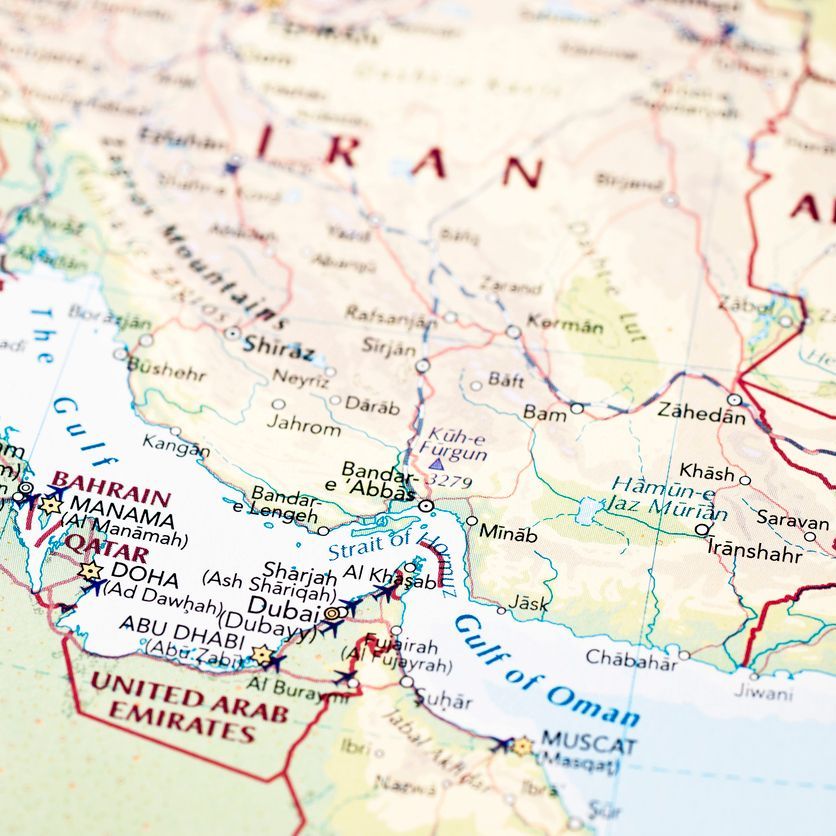
Although initially militarily successful, the British and French eventually caved to international pressure from the United States, the Soviet Union, and the United Nations to leave, and the Suez Canal remained a nationalized asset of Egypt, giving Egypt significant influence in international trade. The ultimate failure marked the end of these once great European powers as the primary powers in the world, and the recognition of a new world order with the United States and the Soviet Union as the two superpowers dividing the globe.
If this current crisis ends with Iran controlling the Strait of Hormuz, it will have devastating impact on the credibility of the United States as a superpower in our world. While there are some who think this would be a good thing, I would argue that they are naïve. We are far from perfect, but to not understand that the United States is and has been a beacon of light in an otherwise dark world is to be willingly ignorant of human history.
Do I protest too much? Our military is superior to any other in the world. There is no way we lose this, right? I am a proud graduate of Culver Military Academy. When I was there in the 1980s, our military instructors were all Vietnam veterans. They taught one lesson I will never forget, simply by asking a question: “How do we lose a war without losing a single battle?” Militaries win wars, but politicians lose them.
Starting this war may have very well been a huge mistake, or maybe it wasn’t. Ultimately history will decide that, but for the sake of argument, let’s just say it was a mistake. That mistake has been made and it cannot be undone. We desperately need adults who understand that. We need leaders in Congress who want to do something more important than go viral on social media, and we need an established media that understands that this isn’t a game of gotcha. Unfortunately, we have neither.
Ultimately, our leaders are a reflection of us. Do we reward immature behavior? Are we glad when our elected officials allow TSA employees to go unpaid and travelers to have their lives disrupted just to make a political point that they had already won? Do we applaud when our representative lands some childish zinger in what is supposedly a working committee meeting, which derails any actual work but makes for great online entertainment? Are we still a serious nation that understands that we live in a serious world?
If we are, then we will understand that even if we disagree with the action in Iran, we know that success is of vital importance to the world. We can let our disagreement be known in the upcoming election and work to ensure similar mistakes are not made in the future. However, we must deal with today for what it actually is and not what we hoped it would be. We are in this now, and we had better win it. At least that is my perspective.
Warm regards,
Chuck Osborne, CFA
~Turning One Mistake into Two