The stock market is filled with individuals who know the price of everything, but the value of nothing.
Philip Arthur Fisher

Our insights, reflections and musings on the most timely topics relevant to managing your investments.
Every once in a while there are two (or more) possible scripts. We are at one of those moments now. We have had a bear market, and we have rallied off the bottom; but now what?
Why do they keep changing the definitions of words? Based on the initial reading for 2nd quarter 2022 GDP, we just had the second quarter in a row of negative growth. So we are in a recession, right?
This attention to attitude-measured-by-surveys is not helping the market. Attitude changes far more rapidly and more extremely than reality. There are a lot of real issues out there, primarily inflation. But, the biggest issue in the market right now is the fixation on mood.
In our last Insight I predicted that after the Fed’s rate hike we would see the market sell off and then rally. We got that part right, but now what? Is this the final lasting rally or just another short-lived bump?
The Fed raised rates by 0.75 percent and the market celebrated…before it sold off. I believe we have seen this movie before. Is the market being overly pessimistic?
“Now what are you going to do? You done dropped your gun in the last scene!” ~ Eddie Murphy
I don’t know about you, but I find that there is a reason certain lines from pop culture seem to have staying power. In a meeting just last week, one of my colleagues was discussing a remote probability. Immediately someone (okay I confess, it was me) said, “So you’re telling me there’s a chance?” Everyone laughed. It isn’t because the line is that funny, it is because everyone at that table recognized it as a line from the movie, “Dumb and Dumber.” It is these little things, the inside jokes, that in part make up a culture.
Wall Street also has a culture, and a language. Often times the market does what it does because of a Wall Street script that is known by those who share the culture and know the punch line before it is delivered. There are naysayers, and frankly I’m one of them. There is no actual script; history does not have to repeat itself. However, it often does. Why? I believe it is the phenomenon of the self-fulfilling prophesy. It happens that way because we made it happen that way, because we believed that is the way it was going to happen.

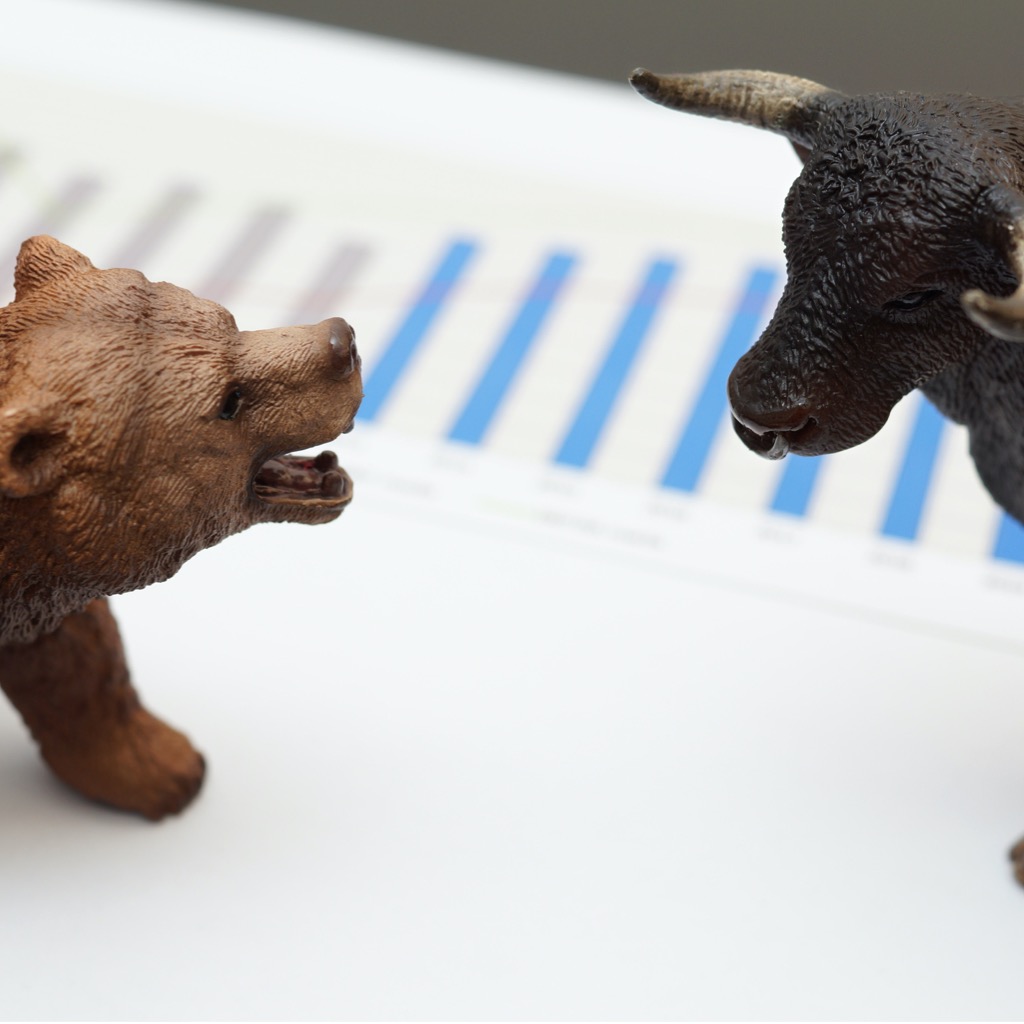
However, every once in a while there are two (or more) possible scripts. We are at one of those moments now. We have had a bear market, and we have rallied off the bottom; but now what? One possibility is that the bounce we have seen over the last six weeks was just a “bear market rally.” Long-lasting bear markets often have dramatic rallies, but they eventually peter out and the bear market resumes; that is possible. Yes, I am saying there is a chance.
It is also possible that bottom is in. We have just seen the first move in a lasting rally; in that script we have a dip, and then the rally resumes. This is the more likely scenario, in my opinion. Earnings have held up much better than the pessimistic consensus view of a few months ago predicted. Economic data has been mixed but employment has held up, the consumers are spending, and inflation may have peaked. This would all lead to a resumption of the rally.
Of course, the thing about the future is that no one really knows what it is. Don’t say that too loudly around Wall Street. The script says that when the Fed raises rates, there must be a recession. Of course, we are in a recession (as defined for the entirety of my career), but those who deny the current data also seem completely certain that a recession is on its way; they keep saying that things must get worse, but the truth is that we don’t know that.
That is why we have to be prudent in our decision-making. The top-down headlines will make one depressed, but the view from the bottom-up is very different. Just this past Friday I met with someone who told me that everyone she talks to is busier than ever; that doesn’t sound like the gloom-and-doom reports we hear in the news. The truth is that it is far easier to project the probable future of a particular company than it is to predict an entire economy.
Some companies are struggling in this environment, but others are hanging in there. To me, this reads like the script where we take a step back and then resume the rally. Of course, we have to keep watching to know for sure. That is why we remain cautious and defensively postured. The key to knowing what to do now, is to think through the different probabilities and have a plan for each scenario. Step one: let’s listen to Mr. Murphy and make sure we don’t drop anything that might be needed later.
Warm regards,

Chuck Osborne, CFA
Managing Director
~Now What?
“You keep using that word…I do not think it means what you think it means.” ~ Inigo Montoya, “The Princess Bride”
Why do they keep changing the definitions of words? It seems like every time I get a good handle on the English language they go and change definitions on me. Is it any wonder we have a hard time communicating with each other?
For example, I know what a vegetarian is, but some would cheat. They would say, “I’m a vegetarian but I’ll eat fish.” Okay? Fish aren’t vegetables. So, then came vegan, which was a little more confusing. I thought I understood until I was eating with a vegan friend, and he asked for some honey. Can vegans eat honey?
Now people aren’t vegetarians or vegans, they simply “eat plant-based.” I am doubly confused. First, people don’t eat plants; insects eat plants. People eat fruits and vegetables, which come from the plants from which they grow. No one has ever come home from work and looked at her husband and said, “What do you want for dinner? I’m in the mood for some boxwood, we have a couple in the front walkway that need trimming.” Secondly, what does “plant-based” mean? I can tell you what it doesn’t mean – it doesn’t mean plant. So, plant does not mean fruit or vegetable, and plant-based does not mean plant, so what is it? I don’t know, but I’m not eating it.

I have never been one for food fads anyway, but I thought I had a pretty good handle on economic jargon. For example, the word “recession.” As long as I have known, a recession is two quarters in a row of negative economic growth. Based on the initial reading for 2nd quarter 2022 GDP, we just had the second quarter in a row of negative growth. So we are in a recession, right?
Many people are saying no, some of whom are politicians who have an incentive to deny being in a recession. There is a long history of politicians from both parties denying the existence of a recession on their watch. However, this time it is not just the politicians – there are many financial pundits saying we are not in a recession. The truly curious thing is that those same pundits will then say with undue confidence that we are going to have a recession, but we are not in it yet.
Personally, if I get a vote, it will be to stop changing definitions of words. That means I believe we are in a recession. I do understand why many are saying otherwise; this is not a normal recession, if such a thing exists. It certainly isn’t a financial crisis like we had 2008, or a complete shut-down like we had in 2020. Actually, the jobs report just came out: the economy added approximately half a million jobs last month, and the unemployment rate went down. That doesn’t sound like a recession, so what is happening?
Inflation is happening. Our government reports “real” gross domestic product (GDP). In other words, it is adjusted for inflation. The economists at the U.S. Bureau of Economic Analysis (BEA) take the actual growth of the economy and then adjust it based on inflation. What that means is that nominal GDP was likely positive, it was just up less than inflation. The economy is growing, it is just not keeping up with inflation, which is growing faster.
To see this more clearly one can look at Disposable Personal Income (DPI), which the BEA releases in both real (inflation-adjusted) and nominal, or what they call “current dollar.” According to the BEA, current dollar DPI increased 6.6 percent in the second quarter. However, inflation was higher, so real DPI decreased 0.5 percent. We had more money in our collective pockets, but less actual spending power.
Most recessions that have taken place over the last 30 years have occurred in low- to no-inflation environments. In those cases, there wasn’t such a large gap between real and nominal. If we had real GDP going down, we likely had nominal GDP going down too, which meant higher unemployment and worse economic conditions than we have today. We have also gotten better at prolonging economic expansions, which has meant fewer recessions; the trade-off has been more severe recessions. Whether that has actually been worth it is a question for another day.
Are we in a recession or not? I say yes, because I believe words must have clear definitions. The Old Testament tells us that in the early days of human existence we all spoke the same language and cooperated with one another to build a tower. It was going to reach all the way to heaven. God didn’t like that, so he mixed our language so that we could no longer communicate. Once we stopped communicating, we stop cooperating. Sound familiar?

Plants are used to decorate our yards and occasionally our houses as well. We grow them, we don’t eat them. “Based” means it came from a laboratory, not nature. History tells us not to eat anything that comes from a laboratory. Fruits and vegetables are things that grow in nature that humans eat. A recession is a slowdown in economic activity defined by two consecutive quarters of negative GDP growth.
We are in a recession. It is not severe, and as long as employment holds up it may never become severe. Still, we need to call it what it is. It’s a recession. Things are not great, but they are not so bad that we have to resort to eating plants. It’s summer, which is peach season. Eat a peach instead – it’s a fruit, and it’s delicious.
Warm regards,
Chuck Osborne, CFA
Managing Director
~What’s in a Word?
‘Tis the season for family vacations: The kids are out of school, and now is the time for some good old-fashioned family togetherness. It will be great, or it will be miserable, depending on the age – and therefore the attitude – of the children. (Vacations with adult children is another thing altogether, so I’ll keep this to school-aged children.) In my opinion, the best times are when they are seven to nine years old – there is no more gear to haul around, they listen and obey, and everything is new and wonderful. This was the age our son was the first time we took the kids to Disney. It was magic. His younger sister cried when we had to leave.
Years pass, and children turn into teenagers. The vacations have not changed all that much, but the attitudes sure have. If the kids aren’t fighting each other, then they are busy being too cool to care about whatever we are doing. This is the age of knowing everything, or more precisely, thinking they know everything. Attitude.
Attitude is also driving the market. The actual economic data is certainly not great, but the sentiment surveys are downright depressing. Small business owners are more negative than they have ever been in more than 40 years of surveying such things. That means they are more negative than they were after 9/11; more negative than in the midst of the Great Recession. There is a feeling out there that everything is going wrong.
This feeling isn’t unfounded; there are a lot of things going wrong. I know I personally am frustrated because one of my pet peeves is making the same mistake twice, and so much of what got us into this mess is mistakes that we have as a nation previously made. Why don’t we learn? However, this is not the worst situation we have been in in the last 40 years. We made it through everything else, and we will make it through this.
This attention to attitude-measured-by-surveys is not helping the market. Attitude changes far more rapidly and more extremely than reality. There are a lot of real issues out there, primarily inflation. There is fear of a recession, and it is possible we may technically be in one. The definition of a recession is two quarters in a row of negative GDP growth; the first quarter of 2022 was negative, and it is certainly possible that the second quarter was as well. However, we have full employment and consumers are spending, so it is difficult to have a severe recession while that is occurring.
The biggest issue in the market right now is the fixation on mood. A survey says inflation expectations are up and the market dives; a survey says inflation expectations are down and the market surges. Attitude leads to volatility, but ultimately what matters is reality. We will get some reality as companies report earnings; until then we will see violent swings with mood, but we are going nowhere.
This too shall pass. It is hard today, but we need to keep a good attitude. Our problems are real but fixable. It takes hardship to learn lessons, and hopefully this time we learn from it. Meanwhile we can’t control what happens, but we can control our reaction and most importantly our attitude.
Warm regards,
Chuck Osborne, CFA
Managing Director
~Attitude is Everything
In our last Insight I predicted that after the Fed’s rate hike we would see the market sell off and then rally. We got that part right, but now what?
Is this the final lasting rally or just another short-lived bump? This is when I am supposed to give a bold prediction and hope that I am correct, but the truth is, I don’t know. It depends on the dance between inflation and recession. As I have said previously, the market is not afraid of inflation as much as it is afraid that the Fed will put us into a recession. So, will they?
I have always believed and continue to believe that the Fed gets far too much credit or blame for economic conditions. Sure, interest rates will have some impact, but do businesses really make go or no-go decisions based on a few basis points of interest? If a business venture is predicted to be profitable only if the Fed doesn’t raise rates by a few percentage points, then that is far too thin a margin of error. Perhaps one believes the Fed will be bolder as they were under Paul Volcker when rates peaked at 20 percent in 1981, but there is no indication that this Fed has that kind of courage.
The problem with thinking that economics has become a science is that, unlike real science, there is no control group. There is no way of knowing what the economy would be doing if the Fed had acted differently. We simply observe what the Fed does and then look at what happens. Then we give the Fed credit without much question. I’m not so sure.
Which means I am not convinced that the Fed has ever actually saved the day, nor am I convinced that any Fed other than Volcker’s has ever caused a recession. There are too many other contributors to give full blame or credit to a central bank. Currently we still have a tight labor market, and it is hard to actually go into a recession with a tight labor market.
Consumer sentiment is low, and this has led to downward pressure in the market, but does sentiment really matter? Spending is to the consumer what alcohol is to the alcoholic. When depressed the alcoholic drinks. When celebrating the alcoholic drinks. Mood isn’t the defining factor. Likewise, the consumer spends. When depressed it is “retail therapy;” when happy it is “treating myself.” It may matter in completing a survey, but it does not really matter when adding up economic activity.
In our environment with prices rising, the consumer may spend differently. Gas and food are absolute necessities and will take a larger share of the wallet, but as long as consumers have income, they will spend it. That makes a recession less likely in our opinion. However, a recession can be self-fulfilling prophesy and the more the media fixates on it, the greater the probability of it happening.
In the meantime, we expect the market to stay volatile. Good news brings big up days and bad news big down days while we search for a direction. We remain defensively positioned and ready to move in either direction once a little clarity is gained; this is the prudent thing to do at the moment.
Warm regards,
Chuck Osborne, CFA
Managing Director
~Now What?
The Fed raised rates by 0.75 percent and the market celebrated…before it sold off. I believe we have seen this movie before. Just six weeks ago the Fed met, raised rates as expected, and the market went up; as the market really digested what was happening over the next few days, the market dropped.
Then the market began to climb The Wall of Worry. It rallied right up until the sudden selloff last week and Monday, which once again brought us right back to where we were before the last Fed meeting. We suspect that same pattern will play out: two down days as we head into a long weekend, then the real reaction will take hold.
As a reminder, we have already taken defensive measures in our clients’ portfolios, which are helping. We are watching closely and will take further action if we believe it is necessary.
We still believe that the market is overly pessimistic. The greatest risk factor for a possible recession right now, in our opinion, is that pessimism. Recessions can be caused simply by self-fulfilling prophecy. The truth is that Wall Street is dislocated from the real world, and they often get it wrong in both directions.
These times always seem to last forever as we go through them, but they don’t. This too shall pass, and one day we will look back and be grateful for having owned and continued to purchase stocks at these prices. In the meantime, we must not ignore the market; swimming against the current is not advisable.

As we go into this weekend, it is a good time to focus on what really matters. For all the fathers out there, I hope you have a Happy Father’s Day. Let us also recognize our newest national holiday, Juneteenth. Hopefully this holiday serves a purpose of bringing us together and stopping the constant division. It is a reminder of our nation’s past sins, but also a reminder of what makes us so unique. Every nation sins, yet few if any have fought so hard against their own brothers to right those sins. The United States of America isn’t perfect, but there is no place on earth I would rather call home. I hope you share that feeling as we celebrate Juneteenth.
Warm regards,
Chuck Osborne, CFA
Managing Director
~Fed Rerun
