The stock market is filled with individuals who know the price of everything, but the value of nothing.
Philip Arthur Fisher

Our insights, reflections and musings on the most timely topics relevant to managing your investments.
It isn’t just Simone Biles who feels the pressure of unrealistic expectations lately: Second-quarter GDP reported on Thursday this week. The expectation was for 8.5 percent, which had already come down from more than 9 percent; yet the economy actually grew at 6.5 percent according to the first reading of GDP. That is a full two-point deduction, which is a little more than simply “not sticking the landing” – this is a huge disappointment. Or is it?
Inflation is a stranger to many. I wrote an article in 2011 about how hard it was to actually have inflation…yet here we are. Why has inflation suddenly returned, and what can we, as investors, do about it?
Wednesday the Consumer Price Index (CPI) came out +4.2 percent over the past year. Thursday morning the Producer Price Index (PPI), which measures wholesale inflation, was announced to be 6.2 percent. More concerning is the reaction of Richard Clarida, the Federal Reserve vice-chair, who said he was, “surprised.”
Remembering David F. Swensen, the manager of Yale’s endowment and a legend in our industry. There are lots of great investors, most of whom prefer not to be in the spotlight, and Swensen was certainly one of those. I never met Swensen personally, but he influenced Iron Capital all the same.
Great expectations often lead to disappointment. We are in the midst of an economic recovery from the reaction to COVID-19, and expectations are indeed getting great. Today our great expectations could lead to disappointment coupled with inflation.
I don’t know about you, but I’m a once-every-four-years (or in this case five years) fan of sports like gymnastics and swimming. My heart goes out to Simone Biles and the USA women’s gymnastics team. I will admit that my first reaction was, “She just quit?” Yet, when we heard from Simone it was clear that she truly believed in that moment that her team was better off with someone else taking her place, and that actually is a brave decision.
I do not believe we can even begin to understand the pressure she is under; in fact I don’t believe gymnasts of the past can understand the pressure she is under. It is one thing to be the best on your team and the team leader; it is another to be told constantly that you are the greatest of all time while still competing. If Simone had done the impossible and gotten perfect scores in every event it would have been, “Oh well, that’s why she is the greatest.” Anything less is treated as a disappointment. Unrealistic expectations are an enormous burden.
It isn’t just Simone Biles who feels that pressure: Second quarter GDP was reported on Thursday this week. The expectation was for 8.5 percent, and that had already come down from more than 9 percent. The economy actually grew at 6.5 percent according to the first reading of GDP; that is a full two-point deduction, which is a little more than simply “not sticking the landing” – this is a huge disappointment.
Or is it? The market has been telling us that people who live in the real world have been lowering their expectations much faster than economists. The interest rate on the 10-year Treasury bill is now yielding 1.25 percent, down from the 1.75 percent range. What is that telling us?
It tells me that bond investors are pessimistic about future growth. They believe that we have seen all the economic growth that we are going to see. This is a sea change from just a few months ago when rates were rising rapidly, and it is not just the bond market.
I have said it a thousand times if I have said it once, but the real indicator of how the market feels is not the headline index return, but what is happening under the surface. While the broad indices have held up, underneath the surface we have had a closet correction. Small company stocks, as measured by the Russell 2000, have had a full 10 percent selloff. Value stocks, which had been leading the way in the optimism of economic growth, have sold off. Just about every type of stock there is has been negative over the last several weeks except for big tech, which had been trailing earlier.
Investors now go toward these large technology firms, when they believe there is no growth to be had anywhere else. These high-fliers have somewhat ironically become today’s defensive stocks. The market has gone from telling us that we are going to grow exponentially to saying we are headed for a recession. The market exaggerates.
In reality we are seeing good economic growth; less than the hyperbolic expectations, but still good. We live in a time, however, when missing even unrealistic expectations is treated like the end of the world; it is not, and right as the market was teetering on heading down, corporate earnings have come out and said, “We are doing well.”
Markets overreact on both sides. What was overly optimistic just a few months ago has become overly pessimistic. Small companies are fine, value stocks are fine; we are growing at 6.5 percent. That is a good number. There are never any guarantees in the market, but I suspect that before too long we will get back to rates rising and value and small company stocks leading the way.
We live in a world of constant hyperbole and the market is not immune. It would be great if the exaggeration would stop, but that is a subject for a future Perspective. In the meantime, we have Olympic Games to watch. USA! USA! USA!
Warm regards,

Chuck Osborne, CFA
Managing Director
~That’s a Two-Point Deduction
Inflation is a stranger to many. In 2011 I wrote a Quarterly Report article about how hard it was to actually have inflation. Yet here we are. The Consumer Price Index (CPI) was up 5 percent in May and the Producer Price Index (PPI – wholesale prices) was up 6.2 percent in April. Anecdotally, things like lumber are up 252 percent.

Why has inflation suddenly returned, and what can we, as investors, do about it? The answer to the first question is interesting. For years we have believed that inflation was caused by loose monetary policy, including very low interest rates and the printing of dollars. The idea is simply that inflation is really a loss of value in the dollar as opposed to an increase in value of goods and services purchased with dollars. In 1995 a gallon of milk cost $2.52, according to research from the University of Wisconsin. According to the USDA the average price of a gallon of milk in May 2021 was $3.60. The idea of inflation being a monetary policy issue means that a gallon of milk is a gallon of milk. The actual value of milk has not changed; what changed was the value of the dollar. Today a dollar is worth less than it was in 1995.
This is how we have long understood inflation. For three decades now we have had loose monetary policy and while this brought us such wonderful events as the dot-com bubble and the financial crisis, it has not actually caused overall inflation as so many have feared. Perhaps there is something we missed?
That 30-year period was marked by the victory of so-called “supply-side economics.” Another way of looking at prices is through the economic law of supply and demand: the price of a product is determined by the supply of that product relative to the demand for the product. If the supply is high and demand low, the product will cost next to nothing. If the supply is low and demand high, then the price will be very high.
In the 1960s and 1970s economic policy was dominated by the thoughts of John Maynard Keynes, who believed that government could stimulate aggregate demand, and that the increase in demand would in turn lead to an increase is supply and overall economic growth. In practice it led to low growth, high inflation, and high unemployment. In fairness to Keynes the man, what politicians did in his name was not exactly what he intended; having studied Keynes I personally believe he would have changed his mind (which, like all truly great thinkers, he often did) had he lived to see the results of policies that bared his name. Unfortunately, we will never know.
In the 1980s the Austrian school of economic thought overtook Keynes, believing government should largely get out of the way. In doing so it would make it easier for businesses to make their products, therefore stimulating supply directly. It was coined supply-side economics. Like with Keynes before, what some politicians proposed in the name of supply-side economics would not exactly hold up under scrutiny, but still as a whole this theory had served us well.
As the supply side of our economy grew, prices naturally would level out if not even drop. We have seen this especially in the technology sector over the last few decades. This phenomenon helped to keep overall inflation at bay even as we experienced loose monetary policy and solid economic growth.
This year we have made a dramatic shift towards demand-side economics and large fiscal stimulus, most notably by paying people bonuses not to work, and of course direct stimulus checks. Simultaneously, we are not just ignoring supply but attacking it. It is hard to increase the supply of products when one cannot find people willing to work to make said products. While much of the remaining attack is in the discussion phase, even threats of increased regulation and taxes has an impact on those who provide the supply of goods and services.
With supply remaining low, demand has been increased and right on cue, inflation is back. The Fed continues to say it is transitory. What they mean is that they believe the increase in demand will stimulate growth in supply and all will be good. I hope they are correct, but the folks who believed this in the past never were. Inflation may be here to stay until we re-learn our basic economic lessons.
In the meantime, what is an investor to do? In the shorter term the market is likely to go sideways as it figures all this out. For long-term inflation protection, nothing beats stocks; as prices rise, so do nominal profits and therefore stock prices. The place to avoid is fixed income, where yields below 2 percent mean that an investor is actually losing purchasing power as inflation rises at twice that rate. We remain cautious and will keep looking at inflation. Will it be transitory or is it here to stay? The Fed says one thing and history tells us another. We hope the Fed is right, but we are not counting on it.
Warm regards,
Chuck Osborne, CFA
Managing Director
~Inflation
Wednesday the Consumer Price Index (CPI) came out +4.2 percent over the past year. Thursday morning the Producer Price Index (PPI), which measures wholesale inflation, was announced to be 6.2 percent. More concerning is the reaction of Richard Clarida, the Federal Reserve vice-chair, who said he was, “surprised.” The Fed, a leading contributor to this explosion of inflation, continues to believe this is just “transitory.” It feels like a scene from “The Princess Bride” when Vizzini keeps using the word “inconceivable,” and finally Inigo Montoya says, “You keep using that word. I do not think it means what you think it means.”
The problem at the Fed is the same problem they have had for a long time: There is no voice in the room that has real-world experience. We, along with many others, have written about inflation; Warren Buffett has warned about inflation; and the financial media outlets have been beating the inflation drums, yet the Fed is still “surprised” and still insists that it is only “transitory.”
As we mentioned in a recent Insight, we are set up for disappointment on the economic data front and for inflation. Since then, GDP came out at 6.4 percent growth, which in absolute terms is fantastic. The market was expecting more and thus up only slightly that day. and down significantly the next day. Then we received the employment report: The economy created 266,000 jobs compared to an expectation of 974,000 jobs. The unemployment rate rose even as we are still recovering from the reaction to the pandemic.
The initial response that day from President Biden was, “The recovery is going faster than expected.” Really? Expectations were missed by more than 700,000 jobs. This is precisely what happens when government policy is to pay people not to work. We know this and we have known it for a long time, which is why Bill Clinton reformed our welfare system.
However, we live in a world where facts no longer seem to matter. This is a symptom of the criminal enterprise that is our higher education system, which we will discuss further in our next Perspective. In the meantime, the Administration and the Fed are suffering from a very human condition that John Meynard Keynes described when he said, “The difficulty lies not so much in developing new ideas as in escaping old ones.”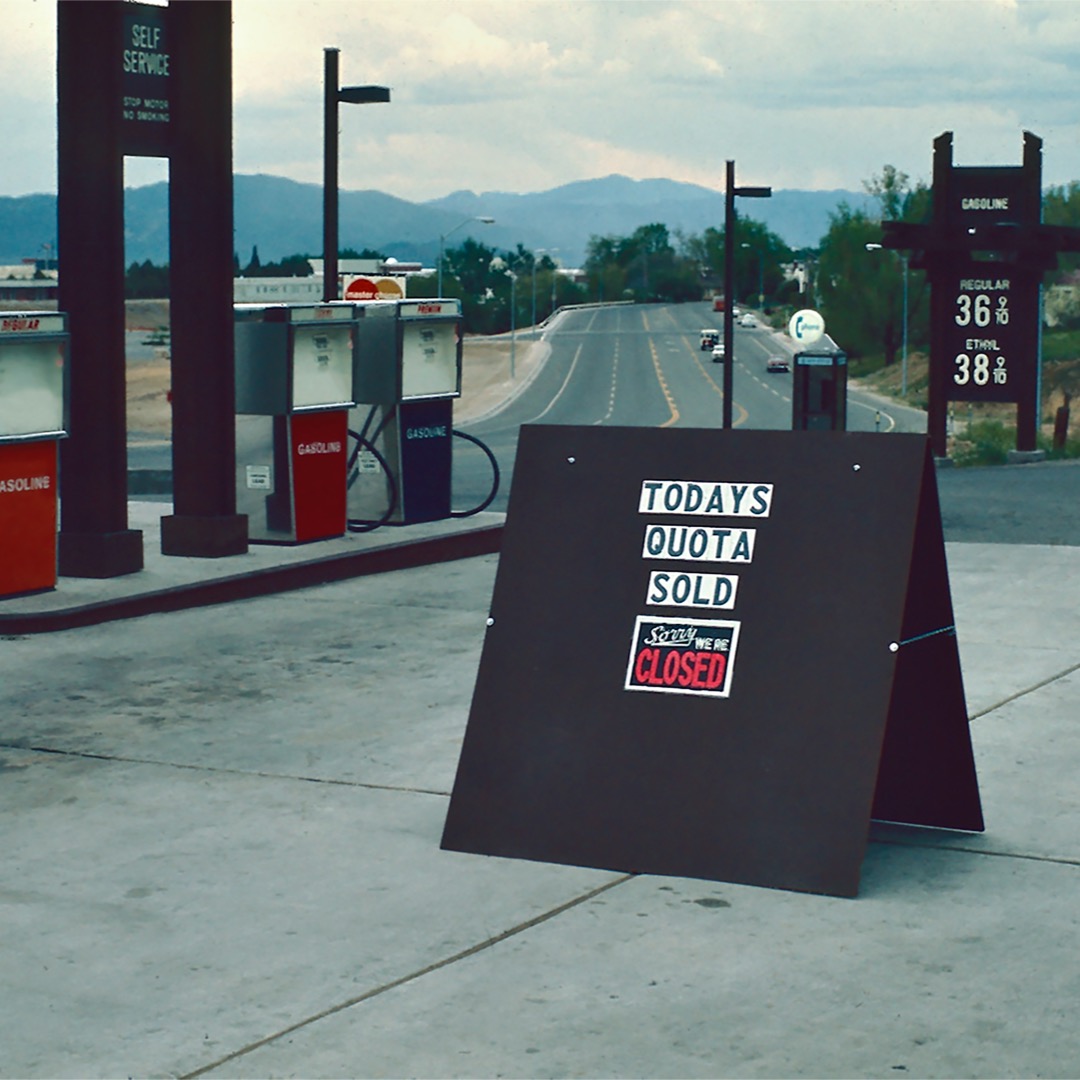
To add insult to injury, we have a self-induced energy crisis, which in fairness actually is transitory. Within a five-minute window on Wednesday I received a text from my sister saying she had to wait in line for an hour to get gas, but fortunately was able to get some; then a text from my cousin, who said she had to go to several gas stations before finding one that still had gas. I then read in The New York Times that there were no gas lines. That is disappointing.
The old ideas that previously gave us the economic malaise of the 1970s are doing the same thing now, and thanks to a lack of cyber security a pipeline shutdown really put us back in the mood for some disco. At least when my sister waited for an hour for gas this time, her legs weren’t burning on the vinyl seats of the pea-green Pontiac Ventura we had to sit in back in the days of the original energy crisis.
How is this trip down memory lane going to impact the stock market? As of now it has simply stalled; down one day and up the next, but caution is certainly in order, at least until the economic data – and reactions from policy-makers – stop disappointing.
Warm regards,
Chuck Osborne, CFA
Managing Director
~That’s Disappointing.
Thursday morning last week I was greeted by a text message from a friend: David F. Swensen had lost his fight with cancer at age 67.
Swensen was the manager of Yale’s endowment and a legend in our industry. Many people often say that Warren Buffett is the greatest investor of all time, but truth be told, Buffett is simply the greatest at drawing attention to himself. There are lots of great investors, most of whom prefer not to be in the spotlight, and Swensen was certainly one of those.
That isn’t to say that Swensen was some mild-mannered person afraid of making a statement. He once claimed that CNBC personality Jim Cramer was a waste of an Ivy League education, and this wasn’t some off-the-cuff cocktail party comment; he began a chapter in his book, “Pioneering Portfolio Management,” with that zinger. Ouch.
I never met Swensen personally, but he influenced Iron Capital all the same. He believed in an aggressive allocation of capital and continually rebalancing, not towards some arbitrary target allocation, but based on future expected returns. Although he successfully managed Yale’s endowment since 1985, he became well-known in the industry in the aftermath of the tech-bubble bust. His process of rebalancing towards investments with larger future expected returns meant that Yale did not own a lot of technology stocks.
In fact, at the time they had a heavy allocation to so \-called alternative investments: private equity, market-neutral hedge funds, and real estate – all areas that had underperformed in the 1990s and were therefore due to outperform in the 2000’s. Outperform they did, and as a result lots of people in our industry copied what became known as the “endowment model.” Of course, as is typical with humans, most did not copy the hard work of Swensen’s process, which would lead to putting money where it is likely to do well moving forward, as opposed to putting it in what did well yesterday. That, like so many truths in life, is simple but not easy.
No, most endowment model followers took the easy route and simply copied the resulting portfolio. This led to one of my favorite Wall Street Journal articles of all time, in which Swensen said that not only were these people not emulating him, but they were in fact “a cancer” and they serve to “facilitate the flow of ignorant capital.” I discussed this at the time in our First Quarter 2011 issue of our “Quarterly Report” newsletter, “There Is No Alternative.”
It likely comes as no surprise that I would have huge respect for someone who was that bluntly honest. I also respected what he did. Under his leadership, Yale’s endowment grew from $1 billion to more than $31 billion. They went from supporting a tenth of Yale’s annual budget to more than a third. The fact that an endowment grew by 30 times and the portion of the budget it pays for only grew three times reflects the criminal enterprise of modern “education,” which we recently addressed on our blog, but that wasn’t Swensen’s fault.
At Iron Capital we have implemented many of the strategies he spelled out in his writings. Ironically, since he was so known for alternative investing, he is a large part of the reason that we never invest in alternatives. He influenced our asset allocation process and specifically our views on rebalancing.
This is not to say we agree with everything he did. Late in his career he publicly stated that investors who were not Yale should invest in index funds. I personally credit that with the fact that he was part of academia and therefore bound to political correctness; in finance departments across the nation, that means worshiping the index fund. However, like every serious investor who has ever said anything good about index funds, that isn’t at all what he did. Being independent and therefore able to give more weight to actual correctness, I file that under the category of do what they do, not what they say.
There is an old Cherokee Indian proverb that says, “When you came into this world you cried and the world rejoiced. Live your life so that when you die, the world cries and you rejoice.” David Swensen has left this world and the investment world is weeping.
Warm regards,
Chuck Osborne, CFA
Managing Director
~A Great Loss
Great expectations often lead to disappointment. No, I’m not talking about the Dickens novel, Pip would never disappoint. I’m talking about real life. How many times do we go into a situation, from a movie to a vacation destination, with really high expectations, only to end up disappointed?
It happens all the time and it begs the question, are the Disney “Star Wars” movies really that bad? This may be blasphemy, but I don’t think they are as horrible as most Star Wars fans seem to believe. The issue is when it says, “Star Wars,” our expectations go, well…to the stars. The original faced no such obstacle. No one had any expectations as nothing like it had every really been done.
Back in our universe and in present day, we are in the midst of an economic recovery from the reaction to COVID-19, and expectations are getting great. The Fed has said it foresees 6 percent economic growth. When most people hear that they probably celebrate, but when I hear that I immediately think: We could grow at 5.5 percent and Wall Street will be disappointed.
During the pandemic the U.S. economy continued to do much better than expected. Commerce, which was already moving online, accelerated that trend. The professional class simply worked from home and barely missed a beat. In the meantime, hospitality workers and school children took the brunt of our draconian reaction – which will be looked back upon as a human tragedy, but they don’t move the economic needle. Beating expectations leads to bullish markets.
In fact, the market is far less interested in absolute growth than it is in growth relative to expectations. We are setting up for potential disappointment, while the Fed has kept the gas pedal to the floor, saying it no longer cares about short-term inflation but will keep the money loose until people get back to work.
At the same time, the administration and Congress are passing relief packages seemingly designed to stop people from going back to work. As I write, the CEO of Red Lobster is on TV saying they can’t find workers. This is a theme. People will not go back to work because they do not want to give up their enhanced unemployment benefits. In the words of Ronald Reagan, the safety net needs to be a hand up, not a handout. It was Bill Clinton who signed the reform to end the harmful policies left over from the Great Society to encourage people back to work.
Those reforms have now been completely undermined. That is a political issue, but it spills over because the Fed now says it won’t fight inflation until unemployment is where they want it. So these sets of policies have the potential to lead to permanent higher unemployment and easy money, which could lead to inflation. The Producer Price Index, which tracks wholesale prices, is up more than 4 percent over the last year, and the recent reading for the Consumer Price Index was 2.6 percent – more than half a percent higher than the Fed’s long-term target.
For years economists have believed that inflation was a monetary policy issue; loose policy (i.e. low interest rates) caused inflation. However, when we actually fought inflation in the 1970s, we had a combination of loose monetary policy and runaway government spending from the Johnson, Nixon/Ford, and Carter administrations. Paul Volcker, Fed Chair at the time, famously raised rates to stop inflation, but Ronald Reagan also slowed the growth of government spending.
Reagan was right, and one does not have to be an economist to understand that. His re-election strategy was simple: Are you better off? He won 49 of the 50 states, narrowly losing in his opponent’s home state. Eight years later, Bill Clinton won largely by admitting that Reagan was right, explaining that being socially liberal shouldn’t have to mean being anti-economic freedom.
For 20 years government spending was largely kept under control, and despite easy monetary policy which led to the dot-com and later the housing bubble, inflation as a whole has been kept at bay. Starting in 2000 and accelerating until this past year of explosive fiscal spending, those controls were loosened to point where they are now completely off.
Is inflation a solely monetary issue, or is it the combination of loose monetary policy plus big government spending? I don’t know the answer to that question, but I do know that too few policy makers are asking it.
Our great expectations could lead to disappointment coupled with inflation. That will not be fun. It might not; it might all work out, but this is the risk we face today. Be cautious when others are greedy – that is investment wisdom to live by and something to keep in mind. It is time for caution.
Warm regards,
Chuck Osborne, CFA
Managing Director
~Great Expectations

